Best AI Data Quality Tools in 2026: Monte Carlo vs Great Expectations vs Soda vs Bigeye
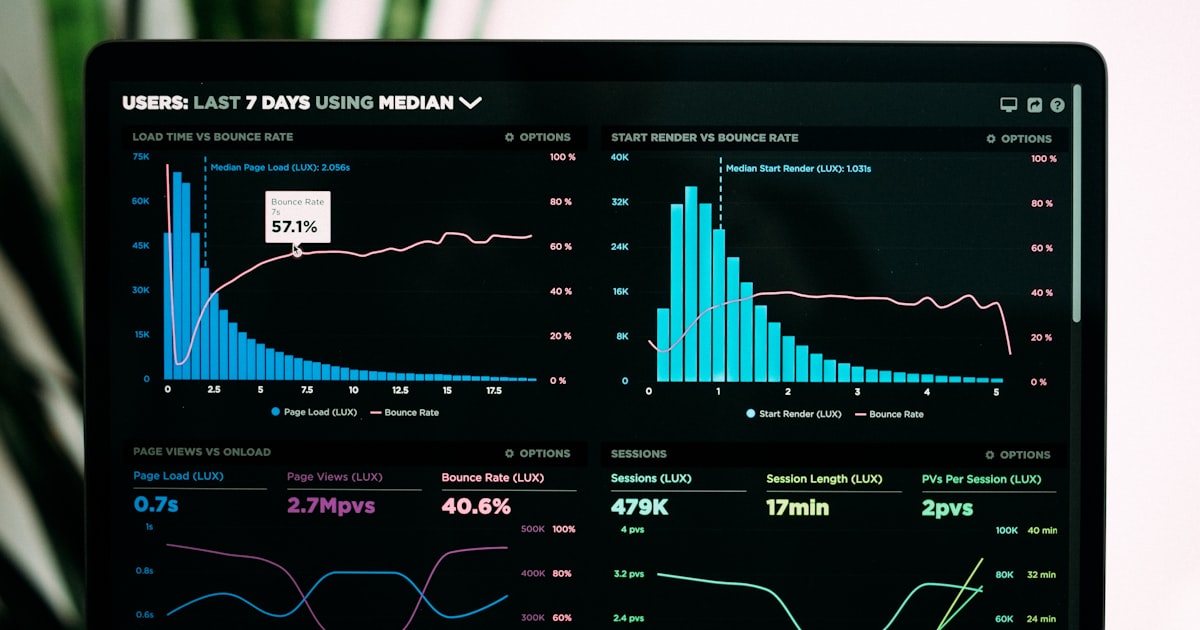
Bad data costs more than most engineering teams realize. A McKinsey analysis estimated that poor data quality costs organizations an average of $12.9 million per year. The problem isn't that companies don't care about data quality; it's that monitoring it manually at scale is impossible. AI data quality tools automate the detection of anomalies, schema drift, missing values, and broken pipelines before they corrupt dashboards, mis-train models, or send wrong information to customers.
In 2026, four tools lead the AI data quality category: Monte Carlo, Great Expectations, Soda, and Bigeye. They take different approaches and serve different team types. Here's how to choose the right one.
What Do AI Data Quality Tools Actually Do?
The core capabilities: data observability (continuous monitoring of your data pipelines for anomalies), data quality checks (validating that data meets defined expectations), lineage tracking (understanding where data came from and what it affects downstream), and incident management (alerting the right people when something breaks and helping them trace the root cause). The AI layer accelerates all of this by learning what "normal" looks like for your data and flagging deviations without requiring manual threshold configuration for every table and column.
Quick Comparison: Best AI Data Quality Tools in 2026
| Tool | Best For | Starting Price | Primary Approach |
|---|---|---|---|
| Monte Carlo | Enterprise data observability | Custom | ML-based anomaly detection + lineage |
| Great Expectations | Data engineers building pipeline tests | Free (OSS) / $Custom | Code-first expectation testing |
| Soda | Data teams wanting YAML-based checks | Free (OSS) / $99/mo | SodaCL checks + AI anomaly detection |
| Bigeye | Teams wanting automated monitoring with low setup | Custom | Auto-profiling + ML-based threshold setting |
Monte Carlo: Best AI Data Quality Tool for Enterprise Observability
Monte Carlo invented the "data observability" category and remains the most complete platform for enterprise teams that need end-to-end visibility across complex data stacks. The core product connects to your data warehouse, runs continuous ML-based monitoring across all tables without requiring manual threshold configuration, and builds an automated data lineage graph that shows you exactly which dashboards, reports, and ML models are affected when a data quality issue occurs.
The AI layer learns what normal looks like for each table, freshness, volume, schema, and field-level distributions, then alerts on deviations. This "ML-based anomaly detection" eliminates the configuration burden that kills adoption of rule-based monitoring tools. You connect Monte Carlo to Snowflake or BigQuery and have meaningful alerts running within days, not months.
Key Features
- Automated Monitoring: ML detects anomalies in freshness, volume, schema changes, and field distributions without manual thresholds
- End-to-End Lineage: Automated lineage from source systems to dashboards and ML models
- Incident Management: Slack and PagerDuty integrations with root-cause analysis and impact assessment built in
- Circuit Breaker: Automatically stops downstream pipeline runs when data quality issues are detected
- Field Health: Monitors individual column-level distributions and flags unexpected changes
Integration Ecosystem
Monte Carlo connects natively to Snowflake, BigQuery, Databricks, Redshift, dbt, Airflow, Looker, Tableau, and most major data stack components. The breadth of integrations is one of its strongest competitive advantages for teams with mature, multi-tool data stacks.
Best For
Data engineering and analytics engineering teams at mid-market and enterprise companies running modern cloud data warehouses who need observability across the full data stack with minimal manual configuration. The pricing is enterprise-grade, so it's not the right fit for early-stage companies or teams with a single data source.
Great Expectations: Best for Data Engineers Who Want Code-First Control
Great Expectations (GX) is the most widely adopted open-source data quality framework, and its 2026 cloud offering adds collaboration and scheduling on top of the OSS core. The approach is fundamentally different from Monte Carlo: instead of ML-based anomaly detection, you write "expectations" (assertions about your data) in Python, and GX validates those expectations against your data on a schedule you define.
This code-first approach gives engineers precise control over what gets checked and how, which is valuable when you have specific business rules that ML anomaly detection wouldn't catch. "This column should never have values below zero" or "this join key should always match 100% of records in the other table" are expectations that are better expressed as explicit rules than left to ML inference.
How It Works
- Expectation Suites: Define reusable sets of data quality assertions in Python or via a GUI profiler
- Data Docs: Auto-generated HTML documentation of your expectations and validation results
- Checkpoints: Run validation suites on a schedule or as part of a CI/CD or Airflow pipeline
- GX Cloud: Managed version with team collaboration, scheduling, alerting, and a centralized results UI
Pricing
- Open Source (free): Full framework, self-hosted, unlimited use
- GX Cloud (custom): Managed hosting, team features, scheduling, alerting, support SLA
Best For
Data engineering teams that want explicit, version-controlled data quality tests integrated into their CI/CD or orchestration pipelines. The learning curve is steeper than Monte Carlo or Bigeye, but the control and flexibility are unmatched. Less suitable for business users or teams that need observability without writing Python.
Soda: Best for Teams Wanting Human-Readable Quality Checks
Soda's differentiation is SodaCL, a domain-specific language for writing data quality checks in readable YAML rather than Python, making it accessible to data analysts and analytics engineers who aren't comfortable writing expectation suites in code. A Soda check looks like a SQL comment with validation rules, readable by non-engineers but precise enough to catch complex data issues.
The "Soda AI" layer, added in late 2024, automatically profiles your data and suggests checks based on column types and distributions. For teams starting a data quality program from scratch, this AI-assisted check generation cuts the time to meaningful coverage from weeks to days. The anomaly detection layer then monitors columns that aren't covered by explicit checks, combining the precision of rule-based testing with the coverage of ML monitoring.
Key Features
- SodaCL: YAML-based check language readable by data analysts, not just engineers
- AI Check Suggestions: Profiles your data and recommends checks based on column patterns and business context
- Anomaly Detection: ML-based monitoring for columns and metrics without explicit checks defined
- dbt Integration: Native integration that runs Soda checks as dbt tests with shared lineage context
Pricing
- Open Source (free): SodaCL checks, self-hosted, no cloud features
- Soda Cloud ($99/mo): Managed monitoring, alerting, collaborative incident management, AI suggestions
- Enterprise (custom): SSO, dedicated support, advanced governance features
Best For
Analytics engineering teams using dbt who want data quality checks that analysts can read and contribute to without a Python background. The $99/month cloud tier is the most accessible paid option in this comparison for smaller teams getting started with formal data quality programs.
Bigeye: Best for Automated Monitoring with Minimal Configuration
Bigeye takes the lowest-friction path to data quality monitoring: connect your warehouse, let the platform auto-profile all your tables, and get AI-configured monitors running across your entire data estate within hours. No code, no expectation authoring, no manual threshold setting. The ML engine analyzes your data's historical patterns and automatically sets thresholds for freshness, volume, and field-level distributions, then alerts when those thresholds are breached.
The "Metric Store" feature lets you define business metrics once and monitor their data quality dependencies automatically. If the revenue metric depends on three upstream tables, Bigeye monitors all of them and traces any quality issue back to its source without requiring you to manually map the lineage.
Standout Capabilities
- Zero-Config Monitoring: Auto-profiles and configures monitors across all tables without manual setup
- Metric Store: Define business metrics and auto-monitor their data dependencies
- Automated Root Cause: When an alert fires, Bigeye automatically identifies which upstream table or column caused the issue
- Freshness SLAs: Set expected freshness windows and get alerted when tables are late to update
Best For
Data teams that want complete monitoring coverage quickly without the overhead of writing and maintaining explicit checks. Bigeye is particularly strong for teams with wide data estates where writing individual checks for every table isn't feasible. The trade-off is less control over exactly what gets monitored compared to Great Expectations or Soda.
Monte Carlo vs Great Expectations vs Soda vs Bigeye: Head-to-Head
| Capability | Monte Carlo | Great Expectations | Soda | Bigeye |
|---|---|---|---|---|
| Setup Speed | ★★★★ | ★★ | ★★★ | ★★★★★ |
| AI Anomaly Detection | ★★★★★ | ★ (rule-based only) | ★★★★ | ★★★★★ |
| Data Lineage | ★★★★★ | ★★ | ★★★ | ★★★★ |
| Engineer Flexibility | ★★★ | ★★★★★ | ★★★★ | ★★★ |
| Value for Price | ★★★ | ★★★★★ | ★★★★★ | ★★★ |
Which AI Data Quality Tool Should You Choose?
- ✓ Choose Monte Carlo if you're an enterprise data team running a complex, multi-tool data stack and need end-to-end observability with automated lineage and minimal manual configuration.
- ✓ Choose Great Expectations if you're a data engineering team that wants version-controlled, code-first quality checks integrated into your CI/CD pipeline, and you have engineers willing to maintain Python-based expectation suites.
- ✓ Choose Soda if you want human-readable YAML-based checks that analysts can contribute to, with AI-assisted check generation to bootstrap coverage quickly. The $99/month cloud tier is the most accessible paid entry point.
- ✓ Choose Bigeye if your priority is maximum monitoring coverage with minimum configuration effort, especially for wide data estates where writing individual checks for every table isn't feasible.
For more on building a strong data infrastructure, check out our comparison of best AI data pipeline tools and our breakdown of best AI vector databases in 2026.
Frequently Asked Questions
What is data observability and how is it different from data quality testing?
Data quality testing validates that data meets specific defined rules (column X should not be null, row count should be above Y). Data observability is continuous monitoring that detects unexpected changes even when no specific rule was written for them, using ML to learn what normal looks like. The best data quality programs use both: explicit tests for known rules, AI-based observability for unknown unknowns.
Is Great Expectations still worth using in 2026 given newer AI-first tools?
Yes, for teams that want precise, version-controlled, code-first quality checks. GX's explicit expectation model is better than ML anomaly detection for business logic validation where you know exactly what the rule should be. Many mature data teams run GX for rule-based checks alongside Monte Carlo or Bigeye for anomaly detection.
How much does it cost to implement a data quality program?
Starting with Great Expectations or Soda OSS is free. Soda Cloud at $99/month is the most accessible paid tier. Monte Carlo and Bigeye are enterprise-priced (typically $30,000-$150,000/year depending on data volume and features). Most teams start with open source to build discipline, then move to a managed platform as data estate complexity grows.
Can AI data quality tools work with any data warehouse?
Monte Carlo, Soda, and Bigeye all support Snowflake, BigQuery, Databricks, and Redshift as primary targets. Great Expectations supports these plus PostgreSQL, MySQL, and file-based sources (CSV, Parquet). Coverage varies for less common warehouses, so verify your specific stack is supported before committing to a platform.
How long does it take to see value from a data quality tool?
Bigeye and Monte Carlo can surface anomalies within days of connection since they auto-profile your data. Great Expectations requires time to write expectation suites, but teams typically have meaningful coverage within 2-4 weeks for their most critical tables. Full data estate coverage is a 3-6 month effort regardless of the tool, as it requires coordination across data owners.
Conclusion
Data quality failures are expensive and preventable. The four tools here cover the full spectrum from open-source, code-first testing (Great Expectations) to zero-config enterprise observability (Monte Carlo and Bigeye), with Soda occupying a practical middle ground at an accessible price point. Pick based on your team's technical comfort level, the size of your data estate, and whether you need ML-based anomaly detection or explicit rule-based validation. Bookmark Techno-Pulse for daily comparisons of the AI tools that keep modern data teams running smoothly.
Join the conversation