Best AI Product Analytics Tools in 2026: Amplitude vs Mixpanel vs PostHog vs Heap
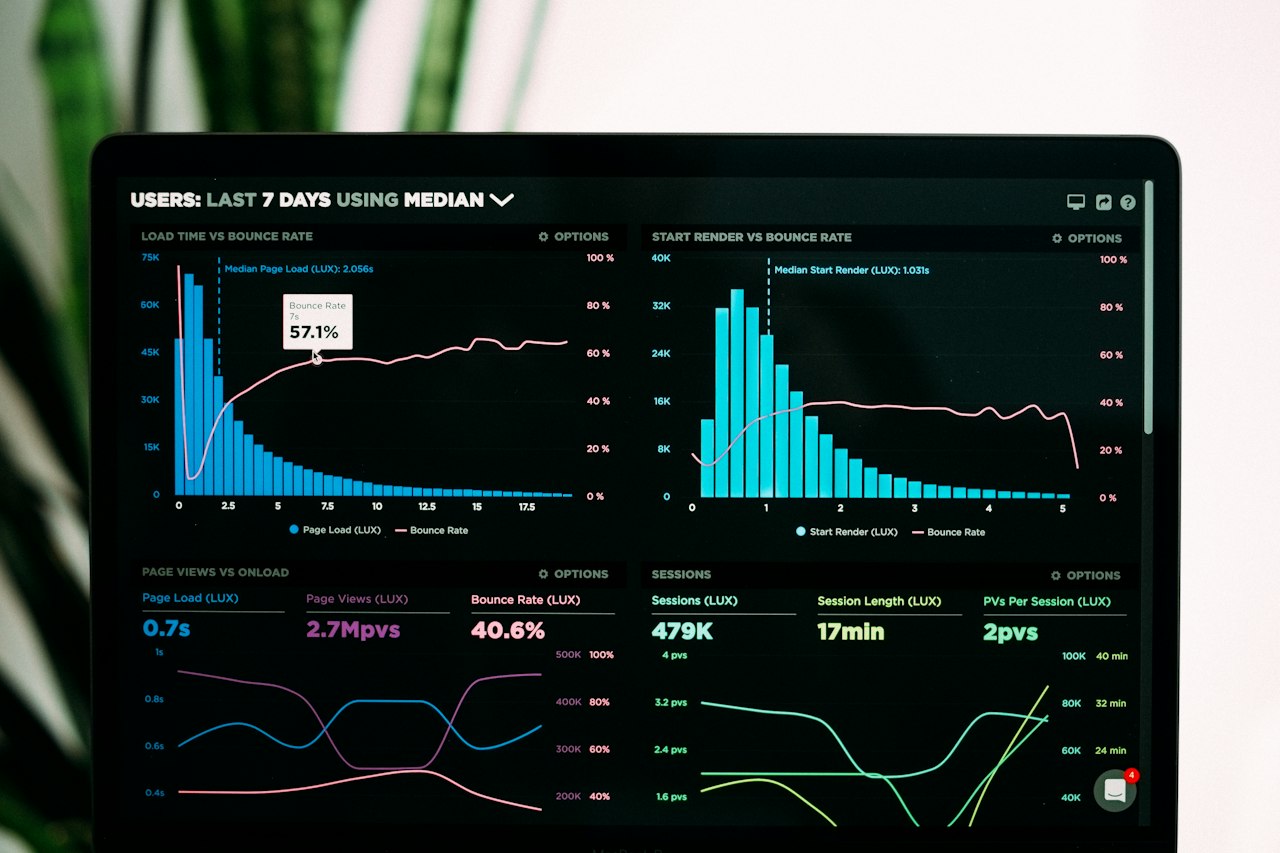
You've launched your product, users are signing up, and something is clearly breaking in your onboarding flow. But which step? On which device? For which segment? Without a solid product analytics tool, you're flying blind. In 2026, the best analytics platforms don't just count events: they surface patterns, predict churn, and tell you exactly where users drop off before you even think to ask.
This guide compares four of the top AI-powered product analytics tools: Amplitude, Mixpanel, PostHog, and Heap. Each one has a different philosophy about data, pricing, and who it's built for. By the end, you'll know which one fits your team's actual workflow.
What Are AI Product Analytics Tools?
Product analytics tools track user behavior inside your software product: events, sessions, funnels, retention curves, and cohort performance. The AI layer adds behavioral prediction, automated insight discovery, and natural-language querying so you don't need a data analyst to get answers. They're distinct from website analytics tools (like Google Analytics 4) because they focus on in-product behavior, not just traffic sources.
Quick Comparison: Best AI Product Analytics Tools in 2026
| Tool | Best For | Starting Price | Free Plan | AI Features |
|---|---|---|---|---|
| Amplitude | Enterprise growth teams | Free / $49/mo | Yes (10M events/mo) | Forecast, Anomaly Detection |
| Mixpanel | Product-led SaaS companies | Free / $20/mo | Yes (20M events/mo) | Automated Insights, Spark AI |
| PostHog | Dev-focused startups | Free / usage-based | Yes (1M events/mo) | Max AI (LLM querying) |
| Heap | Teams without event tracking | Free / custom pricing | Yes (limited) | Illuminate, Journeys AI |
Amplitude , Best for Enterprise Growth Teams
Amplitude is the go-to for scaling companies that need predictive analytics and deep retention analysis baked in. It's been in the product analytics space longer than most and has invested heavily in AI-driven insights over the past two years, with features that genuinely surface actionable patterns rather than just showing you pretty funnels.
Standout Features
- Amplitude Forecast: Predicts future metric values based on historical trends. Useful for planning experiments and setting team targets.
- Anomaly Detection: Flags unusual spikes or drops automatically, so you're not staring at dashboards all day waiting for something to break.
- Behavioral Cohorts: Build cohorts based on any combination of events and properties, then track how they convert, retain, or churn over time.
- Experiment integration: Deep A/B testing integration so you can tie feature flags and experiments directly to retention and revenue metrics.
Pricing
- Starter: Free, up to 10 million events per month
- Plus: $49/month, advanced cohorts and funnel analysis
- Growth: Custom pricing, adds predictive analytics and dedicated support
- Enterprise: Custom pricing, SSO, custom data governance
Best For
Amplitude is a natural fit for product and growth teams at Series A and beyond who run experiments regularly and need retention data that can inform executive reporting. It's overkill for solo founders or early-stage apps with fewer than 100,000 monthly active users. If you're a developer who wants to self-host, look at PostHog instead.
Mixpanel , Best for Product-Led SaaS Companies
Mixpanel's approach is different from Amplitude in one important way: it's designed around user-centric analysis from the ground up. Every query centers on people, not just events. That philosophy makes it easier to answer questions like "how do our power users behave differently in week one compared to churned users?"
The Spark AI Layer
Mixpanel's Spark AI lets you ask questions in plain English: "Which features do retained users engage with most in their first 14 days?" Spark translates that into a query, runs it, and surfaces the answer with an explanation. It's genuinely useful for product managers who don't want to learn Mixpanel's query builder but still need fast answers.
Pricing Breakdown
- Free: 20 million events per month, core reports, unlimited projects
- Growth: Starts at $20/month (scales with event volume), adds custom dashboards, alerts
- Enterprise: Custom, adds SSO, data pipelines, and advanced access controls
The free tier is genuinely generous: 20 million events monthly is enough for most early-stage products to run real analytics without paying anything.
Best For
Mixpanel works best for B2B SaaS companies focused on product-led growth, where the product team owns metrics and needs daily visibility into activation, adoption, and retention funnels. If your team leans on spreadsheets more than SQL, Mixpanel's interface will feel familiar fast.
PostHog , Best for Developer-First Teams
PostHog is the only tool on this list that's fully open-source and self-hostable, which changes the economics entirely for privacy-sensitive or budget-constrained teams. But don't mistake it for a cut-down alternative: PostHog bundles product analytics, session replay, feature flags, A/B testing, and a data warehouse all in one platform.
Max AI: Natural Language Analytics
PostHog's Max AI assistant lets you query your analytics data using natural language. Ask "which events have the highest correlation with 7-day retention?" and Max will run the analysis and explain what it found. For engineering-led teams who think in queries, this is a genuinely useful accelerator rather than a gimmick.
What's Included
- Product analytics: Funnels, retention, trends, user paths
- Session replay: Watch exactly what users did before they dropped off
- Feature flags: Gradual rollouts and targeted releases
- A/B experiments: Statistical significance built in
- Data pipelines: Export to BigQuery, Redshift, or S3
Pricing
- Free (cloud): 1 million analytics events/month, 5,000 session replays
- Usage-based: $0.000225 per event after the free tier
- Self-hosted: Free forever, you pay for your own infrastructure
Best For
PostHog is ideal for engineering-led startups that want a single platform for analytics and experimentation without vendor lock-in. If your CTO is concerned about sending user data to third-party servers, PostHog's self-hosted option solves that outright. It's less polished for non-technical stakeholders than Amplitude or Mixpanel.
Heap , Best for Teams Without Manual Event Tracking
Heap's core bet is radically different from the other three: instead of requiring you to manually instrument events in your code, Heap captures everything automatically. Every click, form submit, page view, and interaction is recorded from day one, with no tracking code required beyond the initial SDK installation.
Illuminate and Journeys AI
Heap's Illuminate feature uses machine learning to scan all the captured data and automatically surface friction points and drop-offs you didn't even know to look for. Journeys AI maps out the most common paths users take through your product and highlights the paths that lead to conversion versus churn. For product teams that don't have time to instrument hundreds of custom events, this is a substantial time saver.
The Trade-off
Auto-capture is powerful, but it creates noise. When everything is captured, finding the signal requires more curation. Heap's interface has gotten better at this, but teams used to clean, intentional event taxonomies sometimes find Heap's data messy to work with until they've defined their virtual events properly.
Pricing
- Free: Limited sessions per month, core analytics
- Growth: Custom pricing based on monthly sessions
- Pro / Premier: Adds Illuminate AI, Journeys, data pipelines
Heap doesn't publish pricing publicly beyond the free tier. Expect to negotiate based on your session volume.
Best For
Heap is built for product teams at companies where engineering bandwidth is scarce. If you can't get a developer to instrument events every time a new feature ships, Heap's auto-capture model removes that dependency entirely. It's also a good choice for companies with complex, multi-path user journeys where Illuminate's automated pattern detection saves significant analysis time.
Head-to-Head Comparison: Amplitude vs Mixpanel vs PostHog vs Heap
| Feature | Amplitude | Mixpanel | PostHog | Heap |
|---|---|---|---|---|
| Event tracking model | Manual instrumentation | Manual instrumentation | Manual + auto-capture | Auto-capture first |
| AI querying | Forecast, anomaly alerts | Spark AI (NL queries) | Max AI (NL queries) | Illuminate, Journeys |
| Session replay | Add-on | No | Yes (included) | Yes (included) |
| Feature flags / A/B testing | Yes (experiment add-on) | No | Yes (included) | No |
| Self-hosting | No | No | Yes | No |
| Free tier generosity | 10M events/mo | 20M events/mo | 1M events/mo | Limited sessions |
| Non-technical user friendly | High | High | Medium | Medium |
| Best pricing for scale | Enterprise pricing | Usage-based | Self-hosted (free) | Session-based |
Which AI Product Analytics Tool Should You Choose?
- ✅ Choose Amplitude if your product team runs frequent experiments and you need predictive retention analytics with enterprise-grade governance and support.
- ✅ Choose Mixpanel if you want a generous free tier, a clean user-centric analysis model, and an AI query assistant that non-technical PMs can actually use without help.
- ✅ Choose PostHog if your team is developer-first, you need session replay and feature flags alongside analytics, or you need to self-host for privacy and compliance reasons.
- ✅ Choose Heap if you don't have engineering bandwidth to instrument custom events and you want auto-capture plus AI-driven path analysis that surfaces issues without manual setup.
If you're also evaluating how your sales and revenue metrics connect to product usage, our comparison of best AI revenue intelligence tools covers Gong, Clari, Chorus, and Salesloft in detail. And if you're working on bringing users into the product in the first place, check out our breakdown of best AI lead generation tools for a full comparison of Clay, ZoomInfo, Apollo, and Leadfeeder.
Frequently Asked Questions
What is the difference between product analytics and web analytics?
Web analytics tools (like Google Analytics) track traffic, page views, and marketing attribution. Product analytics tools track what users do inside your product after they sign up: feature usage, retention, funnel completion, and in-app behavior. They answer different questions for different teams.
Which product analytics tool has the best free plan?
Mixpanel offers the most generous free tier at 20 million events per month. Amplitude's free plan covers 10 million events, and PostHog offers 1 million events per month on cloud (but unlimited on self-hosted). Heap's free tier is more limited and session-based.
Can I use product analytics tools without a dedicated data team?
Yes. Mixpanel and Heap are both designed to be usable by product managers without SQL or data engineering skills. Amplitude has a clean interface too, though its more advanced features benefit from some data literacy. PostHog is more technical but improving its non-developer UX.
How does AI improve product analytics?
AI in product analytics does three main things: it surfaces patterns you wouldn't know to look for (like Heap's Illuminate), it lets you query data in plain English instead of building reports manually (like Mixpanel Spark and PostHog Max), and it predicts future behavior based on past trends (like Amplitude Forecast). All three save significant analyst time.
Is PostHog actually free if I self-host?
Yes. PostHog's self-hosted version is free forever. You pay for your own infrastructure (typically a cloud server or Kubernetes cluster) but not for PostHog itself. The cloud version has a generous free tier too, and usage-based pricing beyond that. Most early-stage startups can run PostHog for months on cloud before hitting any paid threshold.
Conclusion
The right product analytics tool depends on your team's technical depth, your instrumentation strategy, and your growth stage. Mixpanel and Amplitude are the most mature choices for product-led SaaS teams. PostHog is the best option if you want everything in one place and control over your data. Heap removes the biggest barrier to analytics adoption: the need to instrument everything upfront. Whichever you pick, set it up now. The longer you wait, the more historical data you lose. Bookmark Techno-Pulse for daily AI tool comparisons that help you make smarter software decisions.
Join the conversation